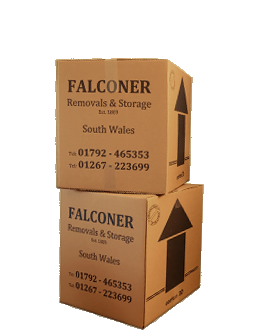

This is one of the most common questions that movers get asked. Although moving a few books is a simple task, moving a whole collection can feel like an impossible job. It’s not just the risk of damaging your books, but the practical difficulties that make it stressful for many of us. After all, how can you move so many heavy items at once and except to keep them —and yourself — intact? Well, the good news is that we’re here to share our top tips for packing and moving your books, to help simplify and streamline the process.
To pack books for moving,
- Clean and prepare books.
- Choose and prepare the right box.
- Methodically pack books.
- Label boxes.
Looking to store your books instead? Read our full guide on How to Prepare Books for a Storage Unit first.
1. Sort, Clean and Prepare Books
First things first, sort through your book collection and determine which ones you want to keep. If there are books that you no longer want, give them to friends or neighbours, or donate, sell, recycle or re-gift them prior to the move. We would always advise that you declutter before you move, as it helps ensure a real fresh start in your new place.
Clean
Once you know what books you want to keep, give them a clean. Books are susceptible to dust and residue build-up, as well as food and liquid damage. A careful wipe with a microfibre cloth should suffice, but for more damaged books and edges, you might want to give them a more thorough clean.
If your books have dust jackets, keep them on. They help to protect the cover from any cracks or rips.
Prepare
Next, sort your books by type (paperback, hardback, other) and size (small, medium, large, x-large). This will help you later, when it comes to packing your books.
If you want to add an additional layer of protection, wrap your books in paper or cloth. This will help to protect your collection — just avoid putting them in plastic bags, plastic wrap or foil, as this can damage the books over time.
Make sure you leave out a few books to read just before and after your move.
2. Choose and Prepare The Right Box
For your books, you’re going to want a large box. Although you might be tempted to fill up the largest box to the top, this will be extremely heavy and impossible to move. Instead, pack your box until 1/2 – 3/4 full, and then fill up with light and soft items at the top (bedding or pillows, for example).
The box you choose should be triple-walled; these are custom designed boxes with three layers of corrugated cardboard that offer unparalleled strength and protection.
Next, it’s time to prepare your box.
To put the box together, do the bottom of the box up with a professional adhesive tape, and turn it upside down. Make sure to continue the tape on the centre at least halfway up the sides of the box to make sure it will hold.
You should then add a layer of packing paper and bubble wrap to the bottom and sides of the box. This forms the cushioned base of the box which you can now put your books in. If there is lots of space left in the box and the books are at risk of moving around, fill the gaps with more bubble wrap and packing peanuts.
3. Pack Boxes
Now it’s time to pack. How you pack books will depend on their type and size.
For paperbacks: Alternate stacking your books flat and stacked, and lined up, spine first, to make sure your books fit snug in the box. Typically, larger books work better on the bottom, with smaller books on top.
For hardbacks: Pack them as you would line them up in a bookcase; standing up, with their spines pressed against the sides of the box. For additional protection, place a piece of cardboard or bubble paper between each book.
Whatever the type, do not pack your books with the paper edge facing down as this can distort and bend the pages.
How to Pack Antique Books
As you might expect, antique books require a different process to regular books. To pack antique — or otherwise valuable or sentimental — books, you should wrap each individual book with acid-free paper or cloth and bubble wrap, and place them in a secure box with a piece of card between each book. Repeat until 1/2 – 3/4 full, and then pack the rest with light items that double up as a protective barrier.

If your antique books need a clean, do this with extra care, or take them for a specialist clean depending on their value.
How to Pack Magazines
For advice on how to pack magazines, check out our guide on storing magazines long-term, where you can find preparation and packing advice.
4. Label Boxes
Finally, label your boxes with “FRAGILE” or “HANDLE WITH CARE” to remind you, or your movers, to take extra care with your books. In addition, this makes it easier to place the boxes in the right room for unpacking.
–
To learn more about our removals services or purpose-built storage facilities, contact Nathan. At Falconers we use meticulous moving techniques, passed down and perfected through generations for over 132 years, to ensure your goods are moved with expert precision and kept in perfect condition. For more expert advice on how to pack, move and store your belongings — or other FAQs on how removals work — check out our blog page.